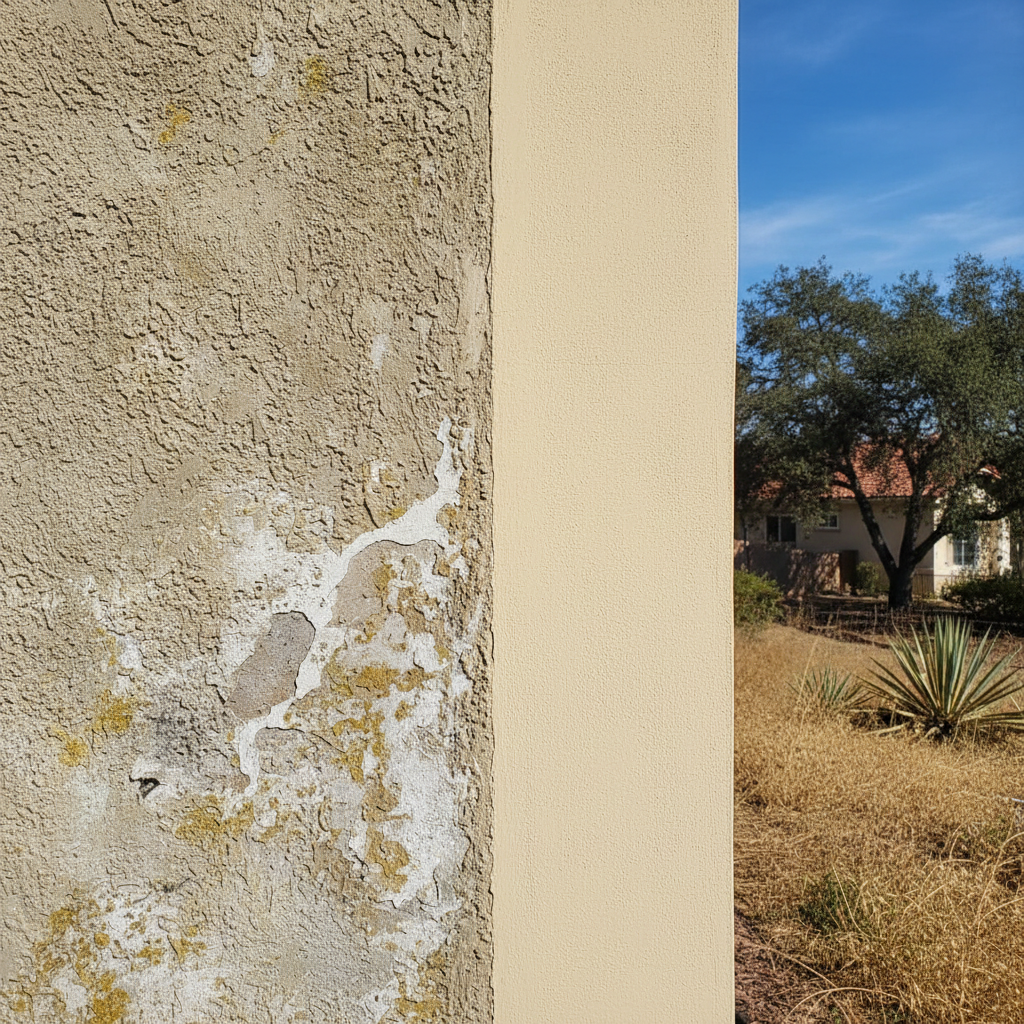
So, you're thinking about stucco for your place, right? Maybe it's a brand-new build or a big renovation. And you've probably heard a couple of terms tossed around: "traditional stucco" and "EIFS." What's the real story with these two? Are they actually that different? Quick answer: you bet they are. And knowing the difference can save you a ton of grief and money down the road, especially if you live here in Arcadia.
What's Traditional Stucco?
When most folks say "stucco," they're usually picturing traditional stucco, sometimes called hard coat or three-coat stucco. This is the stuff we've been using for centuries, honestly. It's what you see on a lot of the older homes in neighborhoods like Santa Anita. It's a mix of cement, sand, lime, and water, applied in layers over a wire mesh. First, there's a scratch coat, then a brown coat, and finally, a finish coat that gives it its texture and color. It's tough, it breathes, and it just feels solid.
What's EIFS?
EIFS stands for Exterior Insulation and Finish System. You can think of it as a fancy, modern cousin to traditional stucco, but its actual makeup is pretty different. Instead of cement layers, EIFS starts with an insulation board – usually expanded polystyrene (EPS), which is basically rigid foam – attached right to your wall. Over that, we put on a base coat with a fiberglass mesh embedded in it for strength, and then a final acrylic finish coat. It looks like stucco, sure, but really, it's an insulation system with a stucco-like finish.
Cost: What You Pay Now vs. Later
Let's talk about money, because that's always a big part of any decision, isn't it? Generally, traditional stucco tends to cost a bit less to install upfront than EIFS. The materials are simpler. And while it's definitely labor-intensive, the specialized components of EIFS can push its initial price tag higher. However, EIFS can really cut down on your energy bills over its lifespan thanks to that insulation board. If you're hoping to lower your AC costs during our hot Arcadia summers, that's definitely something to think about. It's a trade-off: a lower initial cost versus potential long-term energy savings.
Durability and Maintenance
This is where things get really interesting, particularly for our local climate. Traditional stucco is incredibly durable. It's a rigid, impact-resistant surface. If it cracks (and all stucco can crack, usually because of settling or movement), it's often just a hairline crack that's pretty easy to patch and blend. It's also very breathable, meaning moisture can escape easily. That's a huge plus in a place like Arcadia where we do get some rain, and you certainly don't want water trapped behind your walls.
EIFS, on the other hand, is more flexible. It's less likely to crack from minor structural movement because of its acrylic finish. But here's its biggest weakness: moisture. If water gets behind the EIFS – usually through a poorly sealed window, door, or some other opening – it can get stuck between the insulation board and the wall sheathing. This can lead to serious problems like rot and mold, and often, you won't even know it's happening until the damage is extensive. Proper installation, including a good drainage system, is absolutely crucial with EIFS. Every single penetration needs meticulous flashing and sealing. Repairing EIFS can also be more complicated and costly if water damage is involved, just something to keep in mind.
Appearance and Versatility
Both systems can look fantastic, offering a wide range of colors and textures. Traditional stucco gives you that classic, solid masonry feel. It's got a timeless appeal that fits perfectly with many of the architectural styles you see around Arcadia. EIFS can mimic traditional stucco very well, but because it's lighter and more flexible, it can also achieve more elaborate architectural details like cornices and arches with less effort. If you're going for a really intricate design, EIFS might offer more freedom.
My Recommendation for Arcadia Homeowners
Alright, so what's the bottom line for your home here in Arcadia? Given our local conditions – occasional heavy rains, the need for good breathability, and the desire for long-lasting, low-hassle exteriors – I generally lean towards traditional stucco for most residential applications. Its inherent breathability and robust nature make it more forgiving if there's ever a small breach in the system. While EIFS offers great insulation, the risk of trapped moisture if it's not installed perfectly, and the potentially higher repair costs for water damage, make me cautious for typical residential use.
Now, that's not to say EIFS is bad; it's an excellent product when installed by highly experienced crews who really understand its specific requirements for drainage and flashing. But for the average homeowner, the proven track record, durability, and easier maintenance of traditional stucco often make it the smarter, safer bet. We've seen traditional stucco stand up to decades of Arcadia weather, and with Top Notch Stucco Co, you know you're getting a quality job that'll last.
Final Thoughts
Ultimately, the best choice depends on your specific priorities, your budget, and the expertise of your installer. If energy efficiency is your absolute top priority and you're working with a contractor who truly specializes in EIFS and guarantees proper water management, it could be a good option. But for classic durability, straightforward maintenance, and just plain not having to worry as much, traditional stucco is tough to beat. Always get detailed quotes, ask about the specific installation process for water management, and check references. Your home's exterior is a big investment, so make sure you're making an informed decision.